


Why Medical-Grade Camouflage Makeup Changed How I Think About Covering My Vitiligo
I tried every full-coverage concealer at Sephora. None of them worked. Here’s what actually does, and why the difference matters more than I expected.

Vitiligo looks different on everyone, and so does the way people choose to live with it. Some people wear their spots proudly, turning depigmented skin into something they’ve made peace with or even celebrate. Others find comfort in covering up, at least some of the time, and there’s no wrong or right choice in this matter. I’ve lived with vitiligo long enough to have done both.
My patches are mostly on my hands and feet. The feet are easy: socks, shoes, done. And after years of having it visible on my hands, I’d mostly made my peace with it. But a few years ago, during one of the most stressful periods of my life, I started developing spots near my eye. The self-consciousness I thought I’d outgrown came rushing back almost immediately.
I was about to start university and I wanted to feel like the most confident version of myself. So like any other teenage girl, I turned to makeup.
The Sephora Trip
My first stop was Sephora, which (if you’ve ever walked in looking for something without previous knowledge) you’ll know is both a paradise and a maze. I asked a beauty advisor for the best full-coverage concealer they had. After a lot of different product trials and shade matching, we found that the Tarte Shape Tape worked the best with my skin tone. It’s been a bestseller for years for good reason: it covers dark circles beautifully, blurs blemishes, and holds up all day without creasing.
But it didn’t cover my vitiligo spot. Not really. It muted it, softened the contrast slightly, but the patch was still visible, still sitting there like a faint outline underneath the product. The issue wasn’t the concealer itself. The issue was that regular cosmetic makeup, even full-coverage formulas, simply isn’t designed for this.
That experience sent me down a rabbit hole. And what I found on the other end of it changed how I think about coverage entirely.
What Makes Medical-Grade Camouflage Different
I came across a category of products called medical-grade camouflage creams. These are not what you find in most beauty stores. They were originally developed for hospital and clinical settings, covering post-surgical scars, burns, and skin conditions where seamless, long-lasting coverage was a medical necessity, not just a cosmetic preference.
The most significant difference comes down to pigment load.
For vitiligo specifically, this difference matters enormously. The contrast between depigmented skin and the surrounding skin tone is stark, and the only way to bridge that gap convincingly is with a product that has enough pigment density to match your skin tone, not just approximate it.
How to Actually Apply It
The texture is noticeably different from standard makeup. It’s a dense, creamy paste rather than a fluid concealer. It integrates gradually as you work it with a brush or damp sponge, which takes a moment longer than you might expect, but the payoff is worth the patience.
- 1Shade match on your surrounding skin, not the patch. The goal is to match your natural tone so the coverage disappears into it. Testing on the depigmented area will give you an inaccurate read.
- 2Build in thin layers. One or two is usually enough. Thin layers blend more naturally than one thick application.
- 3Set with fixing powder or setting spray. This is non-negotiable. Without this step, the cream will transfer and break down within hours. Once set, it holds, and the finish settles into something skin-like rather than mask-like.
Since I had a small spot near my eye, one layer was enough for full opacity. It blended seamlessly into my natural skin tone, something I genuinely didn’t think was possible after the Sephora trip.
Popular Medical-Grade Camouflage Brands
If you feel like camouflage cream could work for you, here are three globally available brands I’d personally recommend. Each has a slightly different texture profile and shade range, so if one doesn’t work for you, the others likely will.
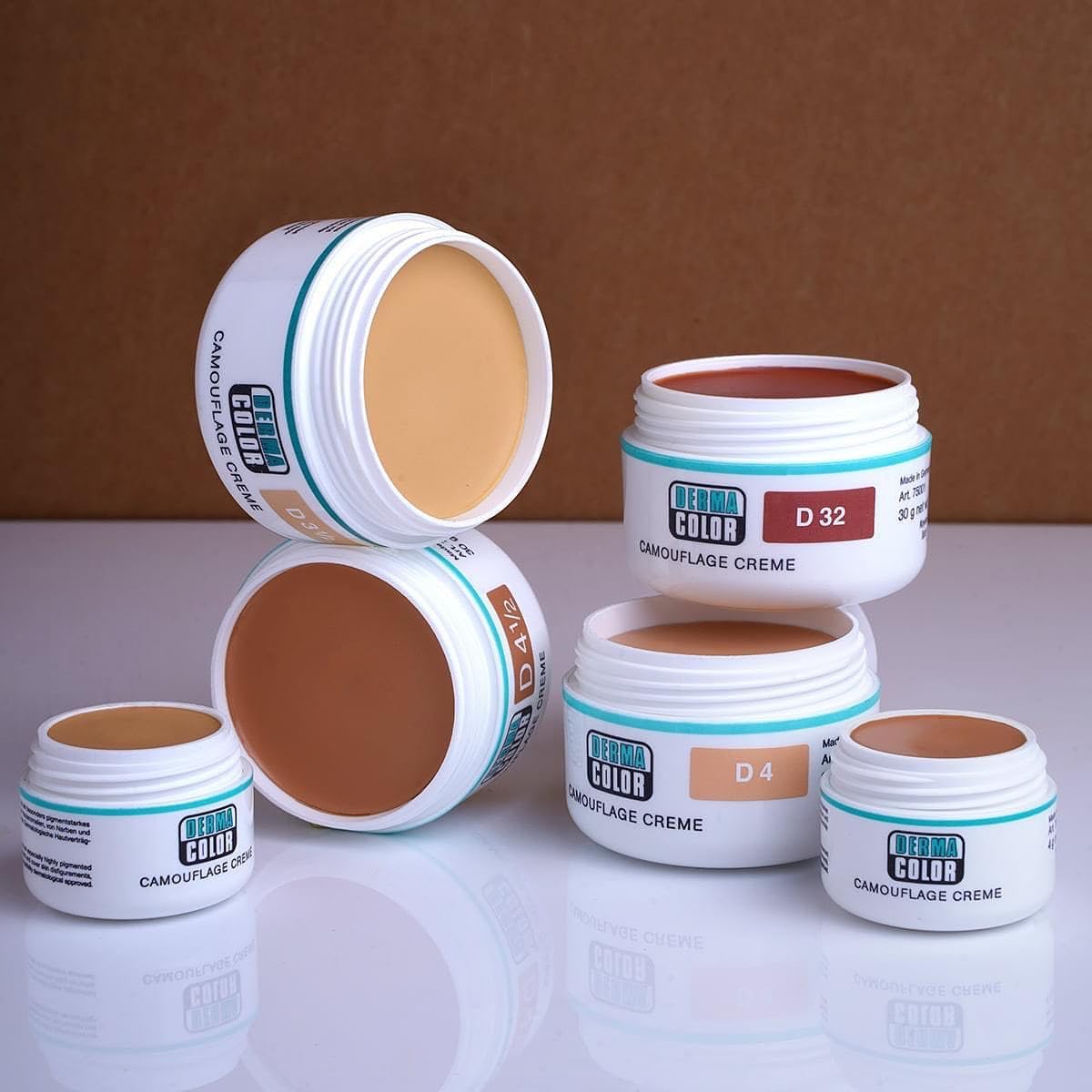
Kryolan Dermacolor
A professional favourite with a dense, long-lasting formula and one of the most extensive shade ranges available, particularly for deeper skin tones. This is the one I chose.
Shop Kryolan →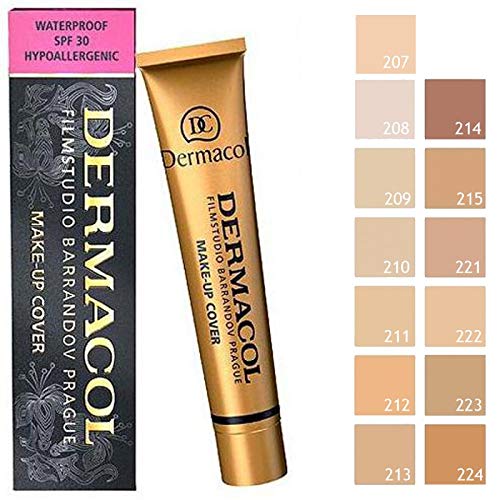
Dermacol
Softer and more spreadable than Kryolan. Blends more easily while maintaining full medical-grade coverage. A good option if you prefer a less dense texture.
Shop Dermacol →
Dermablend Professional
A dermatologist-recommended option with a pharmaceutical background, designed specifically for sensitised and reactive skin. Wide range from cover creme to stick concealer.
Shop Dermablend →Most of these aren’t available in mainstream beauty stores yet, but all three can be found through their brand websites or through Amazon and Noon. Some also ship directly to the UAE. I chose Kryolan Dermacolor specifically because they have a retail store in Dubai Mall, where I was able to get shade matched by professionals and understand the application process in person. That made a real difference.
Finding a Solution That Actually Works
Discovering camouflage creams changed a lot for me. Instead of testing multiple concealers and applying three or four layers for basic coverage, it came down to one. Finding these products earlier would have saved me a significant amount of time and money.
That’s why I wish they were easier to find in mainstream stores like Sephora, where you could get properly shade-matched in person, rather than guessing online. But I remain hopeful, and grateful for the work being done to create more inclusive beauty solutions.
Frequently Asked Questions
Can I use camouflage makeup if I’m currently doing light therapy (PUVA or NB-UVB)?
It’s always worth checking with your dermatologist, but most medical-grade camouflage creams are designed to be inert and non-interfering. That said, remove the product thoroughly before any light therapy session to ensure the skin is completely clean for treatment.
Will camouflage makeup work on darker skin tones?
Yes, though shade matching becomes even more important. The contrast between depigmented skin and deeper skin tones is more pronounced, which is actually where the high pigment load becomes most useful. Look for brands with a strong deep shade range, and be prepared to mix shades. Kryolan and Dermacol are particularly praised for their range in deeper shades.
How do I remove it?
Medical-grade camouflage creams are designed to be transfer-resistant, so they do require proper removal. A gentle oil-based cleanser or micellar water works well. Avoid scrubbing. Use gentle cleansing methods and wash 2 to 3 times to ensure complete removal.
Is it safe to use every day?
Most formulations are designed with daily use in mind. Because they’re formulated for sensitised skin, they’re generally gentler than many cosmetic alternatives. That said, always cleanse thoroughly at the end of the day. Any long-wearing product benefits from proper removal to keep skin clear and healthy.
How much does it cost?
Medical-grade camouflage creams are more expensive than drugstore concealers, typically 100 to 300 AED per product, depending on the brand. But because of the pigment load and staying power, a little goes a long way. Most people find one jar lasts several months with daily use.
Exploring More Ways to Live with Vitiligo
From sun protection to confidence guides. Browse our full collection of resources for daily life with vitiligo.
Explore the Guide →Shop These Products
-
Camouflage Makeup
Dermablend Cover Creme Full Coverage Foundation – Natural Finish
$43.00 Shop at Amazon


