



7 Common Vitiligo Myths, Debunked
When you first hear the word vitiligo, searching online often makes things worse, there’s so much conflicting information. The truth is, vitiligo is not something to fear. Let’s replace fear with facts.
Vitiligo is Contagious

Vitiligo is not caused by bacteria, viruses, or fungi. It’s an autoimmune condition, meaning your immune system mistakenly attacks the pigment-producing cells (melanocytes) in your skin. You can hug, hold hands, or share food with someone who has vitiligo without any risk.
Vitiligo is about biology, not exposure.
Only People with Dark Skin Get Vitiligo

It’s simply easier to see white patches on darker skin because of the higher contrast. However, according to the American Academy of Dermatology, vitiligo affects people of all races and ethnic groups globally.
Vitiligo is Caused by Stress or Poor Lifestyle

Vitiligo happens because of autoimmunity, not because of diet or lifestyle choices. Your immune system becomes overactive and mistakenly destroys pigment cells. However, emotional stress can sometimes trigger or accelerate new spots (a phenomenon known as the Koebner response).
Caring for your mental health, through rest, exercise, mindfulness, or joining a support group, can be as important as caring for your skin.
Vitiligo Can Be Cured with Home Remedies or Herbal Creams
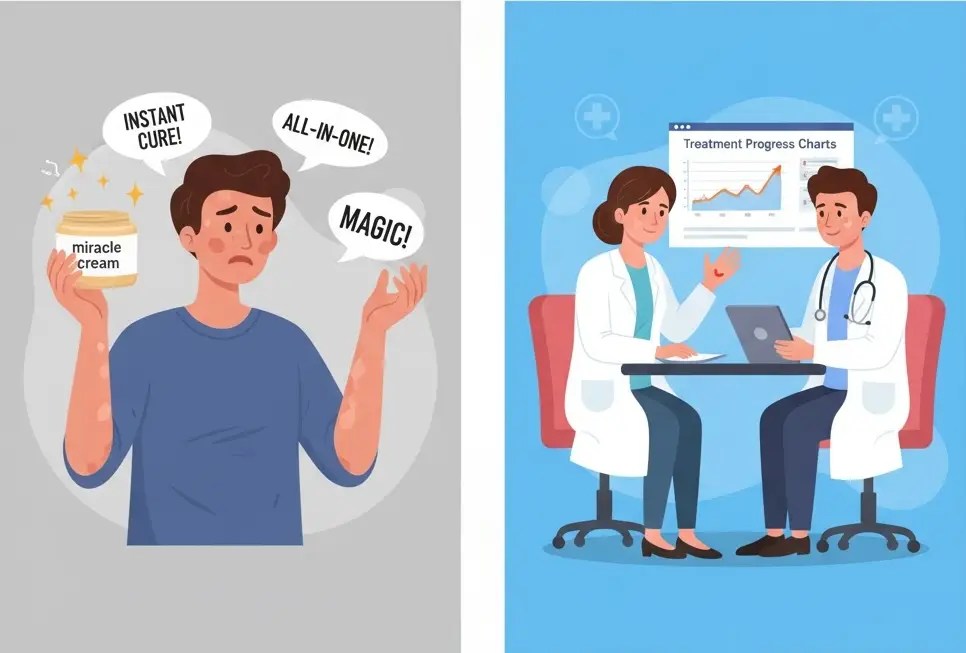
Home remedies and over-the-counter herbal creams can’t reactivate pigment cells. While ingredients like turmeric or aloe vera may offer skin-soothing benefits, they do not treat the underlying immune issue.
Dermatologists now offer proven medical options:
🧠 Calcineurin Inhibitors
✨ JAK Inhibitor Creams
If you see “instant cures” online, be cautious, vitiligo deserves proper medical care, not false promises.
People with Vitiligo Should Avoid the Sun Completely

Because vitiligo patches lack melanin, they are extremely sensitive to UV damage. Broad-spectrum sunscreen (SPF 50+) is a non-negotiable must, it prevents sunburn and minimizes contrast between pigmented and depigmented areas.
However, controlled sun exposure, particularly during medically supervised phototherapy, is actually a cornerstone of vitiligo treatment.
- Daily SPF 50+ broad-spectrum sunscreen
- Protective clothing, hats, and sunglasses
- Controlled, medically supervised sun exposure is beneficial
- It’s about balance, not complete avoidance
Vitiligo Only Affects the Skin

The same pigment cells (melanocytes) that give color to your skin also exist in hair follicles and mucous membranes. You might notice white or gray hair appearing early on the scalp, eyebrows, or eyelashes (poliosis). Some people also see lighter patches inside the mouth.
These changes are cosmetic only, they do not cause pain or internal health problems.
There’s Nothing You Can Do About It

From new topical medications and advanced cell-based therapies to vitiligo-safe concealers and camouflage products, medical research and cosmetic solutions are advancing rapidly. Many people actively manage their condition and achieve significant repigmentation.
Talk to a dermatologist who specializes in pigmentary disorders to find the right combination of medical care, emotional support, and self-care for your skin and lifestyle.
Beauty Is About Individuality, Not Uniformity
Vitiligo isn’t contagious, it’s not caused by anything you did, and it doesn’t make you less healthy or less beautiful. It’s a condition that challenges old ideas about what “normal” looks like.
Understanding the facts helps replace fear with knowledge and stigma with empathy. The more people learn, the easier it becomes for everyone living with vitiligo to feel seen, accepted, and confident in their own skin.
Share Your Experience
Are there other vitiligo myths you’d like to bust? Share in the comments below and let’s build a supportive, fact-based community at VitiligoMart.


